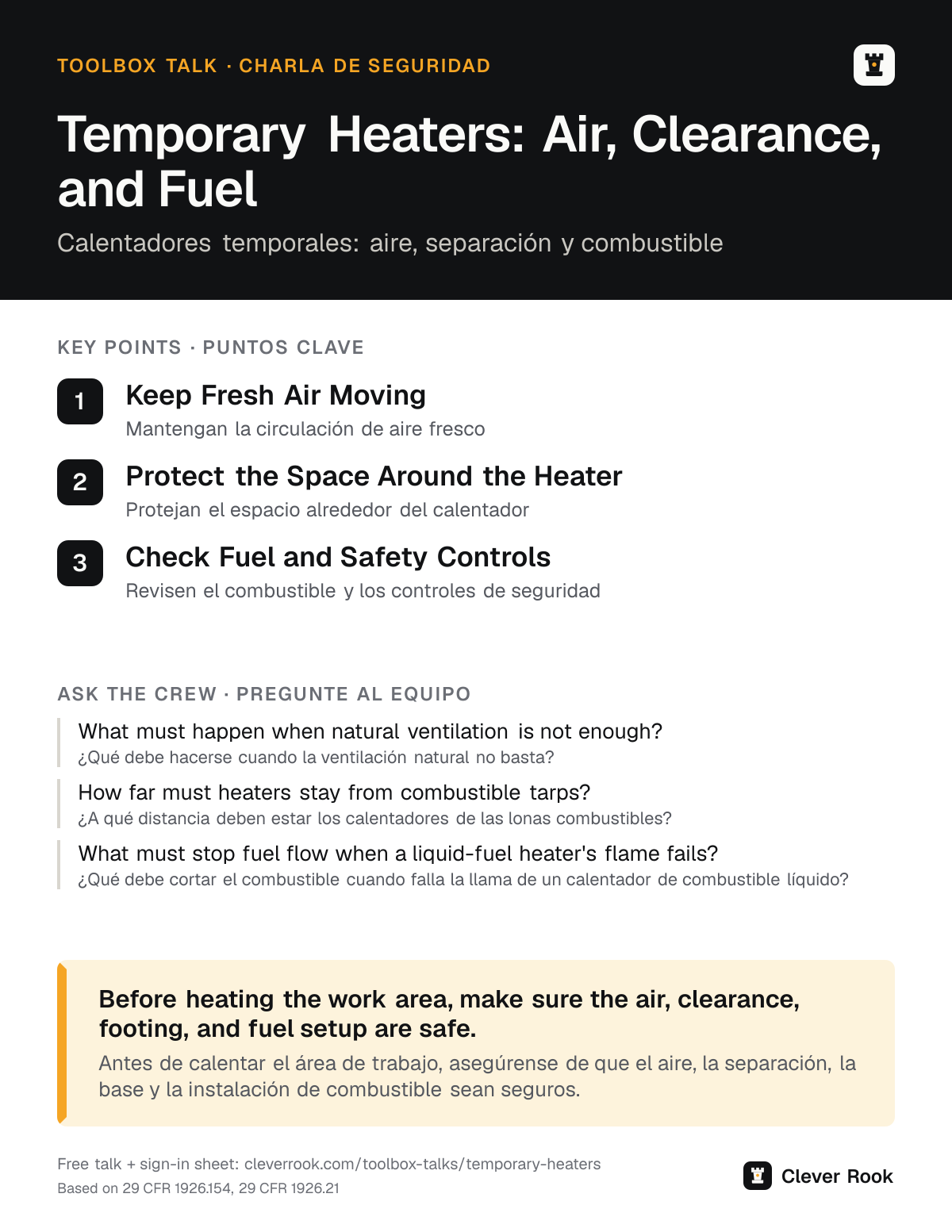
Temporary Heaters: Air, Clearance, and Fuel
Calentadores temporales: aire, separación y combustible
Temporary heaters help crews work in cold weather, but propane, kerosene, and other fuel-burning heaters can create fire and carbon monoxide hazards. As construction crews enclose spaces, move materials, or hang tarps, a safe heater setup can become unsafe.
Los calentadores temporales ayudan a trabajar cuando hace frío, pero los de propano, queroseno y otros combustibles pueden causar incendios y peligros por monóxido de carbono. Al cerrar espacios, mover materiales o colocar lonas, una instalación segura puede volverse peligrosa.
Keep Fresh Air Moving
Mantengan la circulación de aire fresco
Check the air supply before starting a heater. OSHA requires enough fresh air to keep workers healthy and safe, and that means everyone nearby, not just the person running the heater.
Revisen la entrada de aire antes de encender un calentador. OSHA exige suficiente aire fresco para mantener sanos y seguros a los trabajadores, y eso incluye a todos los que están cerca, no solo a quien maneja el calentador.
If natural airflow is not enough, mechanical ventilation is required. Do not close an opening or turn off ventilation just to keep more heat inside.
Si la circulación natural no basta, se requiere ventilación mecánica. No cierren una abertura ni apaguen la ventilación solo para conservar más calor adentro.
Carbon monoxide cannot be seen or smelled. Do not treat a warm room or the absence of smoke as proof that the air is safe.
El monóxido de carbono no se ve ni se huele. No supongan que el aire es seguro porque el lugar está caliente o no hay humo.
Confined spaces need special care: enough ventilation for proper burning, safe air, and control of heat buildup. Stop and report any setup where ventilation is uncertain.
Los espacios confinados necesitan especial cuidado: ventilación suficiente para quemar bien el combustible, mantener aire seguro y controlar el calor acumulado. Detengan el trabajo y reporten cualquier instalación con ventilación dudosa.
Protect the Space Around the Heater
Protejan el espacio alrededor del calentador
Keep heaters at least 10 feet from combustible tarps, canvas, and similar coverings. Fasten coverings securely so wind cannot blow them into a heater or knock it over.
Mantengan los calentadores al menos a 10 pies de lonas, telas y cubiertas similares que puedan quemarse. Sujeten bien esas cubiertas para que el viento no las prenda en el calentador ni lo vuelque.
OSHA sets a minimum distance between each type of heater and anything that can burn. A heater listed for smaller distances may be set up the way its listing allows. Ask your supervisor what distance applies before stacking lumber, packaging, or other materials that burn near a heater.
OSHA fija una distancia mínima entre cada tipo de calentador y cualquier cosa que pueda quemarse. Un calentador aprobado para distancias menores puede instalarse como lo permita su aprobación. Pregunten a su supervisor qué distancia aplica antes de apilar madera, empaques u otros materiales que se quemen cerca de un calentador.
A running heater must sit level unless the manufacturer's markings allow otherwise. Pick solid footing, and stop if moving materials or nearby work could knock the heater over.
Un calentador encendido debe estar nivelado, salvo que las indicaciones del fabricante permitan otra posición. Busquen una base firme y detengan el uso si el movimiento de materiales o el trabajo cercano podría volcarlo.
A heater not made for wood floors must not sit directly on wood or other material that burns. Set it on suitable heat-insulating material, at least 1 inch of concrete, or the equivalent. Insulating material must reach at least 2 feet past the heater in every direction.
Un calentador que no está hecho para pisos de madera no debe ponerse directamente sobre madera ni otro material que se queme. Colóquenlo sobre material aislante del calor adecuado, sobre al menos 1 pulgada de concreto o algo equivalente. El material aislante debe sobresalir al menos 2 pies del calentador en todas las direcciones.
Check Fuel and Safety Controls
Revisen el combustible y los controles de seguridad
If your job includes handling propane, kerosene, or other fuels, your employer must teach you how to handle and use them safely. If you do not understand the setup, stop and ask your supervisor.
Si su trabajo incluye manejar propano, queroseno u otros combustibles, su empleador debe enseñarles a manejarlos y usarlos de forma segura. Si no entienden la instalación, deténganse y pregunten a su supervisor.
Heaters that burn flammable liquid fuel must have a primary safety control, a device that shuts off the fuel if the flame goes out. Report missing or faulty controls, and never bypass them.
Los calentadores que queman combustible líquido inflamable deben tener un control principal de seguridad, un dispositivo que corta el combustible si se apaga la llama. Reporten controles faltantes o defectuosos y nunca los anulen.
Gravity or barometric oil feed does not count as that safety control. A heater built for gravity or barometric feed may only run from the tank built into it, not from a separate tank. Only heaters designed and approved for a separate supply tank may be hooked up to one.
La alimentación de aceite por gravedad o barométrica no cuenta como ese control de seguridad. Un calentador hecho para alimentación por gravedad o barométrica solo puede funcionar con el tanque que trae integrado, no con un tanque aparte. Solo los calentadores diseñados y aprobados para un tanque de suministro aparte pueden conectarse a uno.
Do not use solid-fuel salamander heaters inside buildings or on scaffolds. Report an unsuitable heater rather than improvising a way to keep it running.
No usen calentadores tipo salamandra de combustible sólido dentro de edificios ni sobre andamios. Reporten un calentador inadecuado en vez de improvisar para mantenerlo funcionando.
What would you do? · ¿Qué haría usted?
A crew closes a tarp opening to hold heat while another crew stacks lumber beside a running heater. What would you stop, check, and report before work continues?
Una cuadrilla cierra una abertura entre lonas para conservar calor mientras otra apila madera junto a un calentador encendido. ¿Qué detendrían, revisarían y reportarían antes de seguir trabajando?
Questions for the crew · Preguntas para el equipo
- 1
What must happen when natural ventilation is not enough?
¿Qué debe hacerse cuando la ventilación natural no basta?
- 2
How far must heaters stay from combustible tarps?
¿A qué distancia deben estar los calentadores de las lonas combustibles?
- 3
What must stop fuel flow when a liquid-fuel heater's flame fails?
¿Qué debe cortar el combustible cuando falla la llama de un calentador de combustible líquido?
Before heating the work area, make sure the air, clearance, footing, and fuel setup are safe.
Antes de calentar el área de trabajo, asegúrense de que el aire, la separación, la base y la instalación de combustible sean seguros.