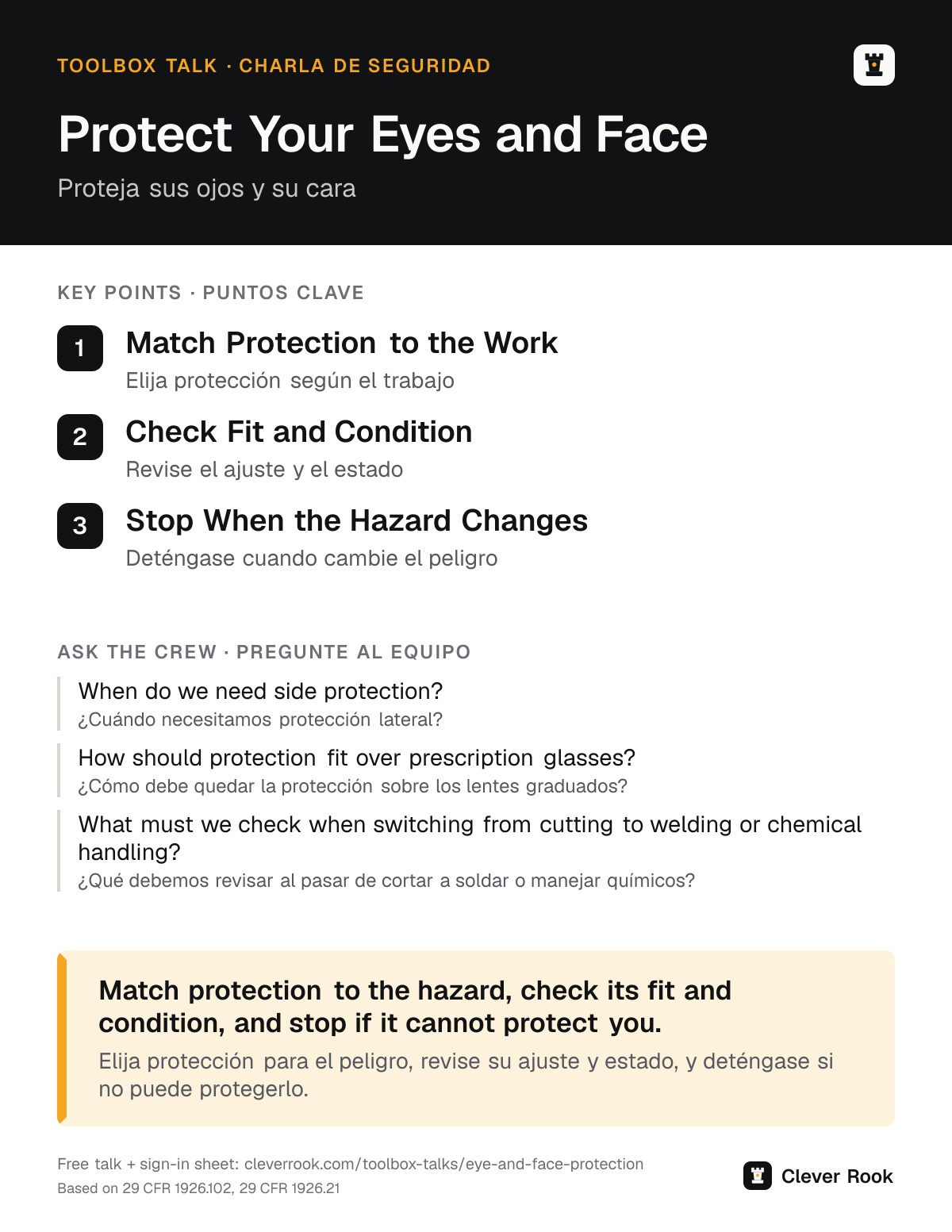
Protect Your Eyes and Face
Proteja sus ojos y su cara
Grinding, cutting, chipping, welding, and handling chemicals can expose your eyes and face to very different hazards. Flying chips, hot metal, harmful light, and splashes need protection made for that hazard. Before work starts, make sure everyone doing the work or exposed nearby knows what protection to use.
Esmerilar, cortar, picar, soldar y manejar productos químicos puede exponer los ojos y la cara a peligros muy distintos. Las partículas, el metal caliente, la luz dañina y las salpicaduras necesitan protección diseñada para ese peligro. Antes de empezar, asegúrese de que quienes trabajan o están expuestos cerca sepan qué protección usar.
Match Protection to the Work
Elija protección según el trabajo
Look at the task before picking protection. Ask what could hit your eyes or face: chips, sparks, molten metal, chemicals, or harmful light. One protector may not cover every hazard.
Revise la tarea antes de elegir protección. Pregunte qué podría alcanzar sus ojos o su cara: partículas, chispas, metal fundido, químicos o luz dañina. Un protector puede no cubrir todos los peligros.
For grinding, cutting, and chipping, use eye protection with side protection wherever flying objects are a hazard. Chips can come from the side, including from someone else's work.
Para esmerilar, cortar y picar, use protección ocular con protección lateral donde haya peligro de objetos que salgan disparados. Las partículas pueden llegar de lado, incluso desde el trabajo de otra persona.
When the face is also exposed, select face protection suited to that hazard. Do not assume that covering your face also provides the eye protection needed for flying particles or splashes.
Cuando la cara también esté expuesta, elija protección facial adecuada para ese peligro. No suponga que cubrirse la cara también proporciona la protección ocular necesaria contra partículas o salpicaduras.
For welding, have the correct filter shade selected using the welding shade guide. Do not guess from how dark a lens looks. Nearby workers exposed to harmful light also need appropriate protection.
Para soldar, asegúrese de que se elija el tono correcto del filtro usando la guía de tonos para soldadura. No lo adivine por lo oscuro que parece. Los trabajadores cercanos expuestos a luz dañina también necesitan protección adecuada.
Check Fit and Condition
Revise el ajuste y el estado
Protection must fit snugly, feel reasonably comfortable, and allow normal movement. Check it while wearing your other work gear. If it shifts or blocks your view, stop and get help correcting the fit.
La protección debe quedar bien ajustada, ser razonablemente cómoda y permitir movimientos normales. Revísela con el resto de su equipo puesto. Si se mueve o bloquea la vista, deténgase y pida ayuda para ajustar el equipo.
Regular prescription glasses are not a substitute for protective eyewear. Use protection with your prescription built in, or protection that fits over your glasses without moving either set of lenses out of position.
Los lentes graduados comunes no sustituyen los lentes de protección. Use protección con su graduación incorporada, o protección que quepa sobre sus lentes sin desplazar ninguno de los dos pares de lentes.
Before use, check lenses, side protectors, straps, and face shields for damage or dirt. Report problems that affect protection or visibility. Clean the equipment properly, and get damaged protection replaced before exposure.
Antes de usar el equipo, revise lentes, protectores laterales, correas y caretas para detectar daños o suciedad. Reporte problemas que afecten la protección o la visibilidad. Limpie correctamente el equipo y reemplace la protección dañada antes de exponerse.
Use protective equipment approved for the task, not an improvised cover. It must meet the accepted protective standards or be shown equally effective. Its manufacturer must be clearly identifiable from its marking.
Use equipo de protección aprobado para la tarea, no una cubierta improvisada. Debe cumplir las normas de protección aceptadas o demostrarse igualmente eficaz. Su marca debe permitir identificar claramente al fabricante.
Stop When the Hazard Changes
Deténgase cuando cambie el peligro
Before handling harmful chemicals, get instruction on their hazards, safe handling, hygiene, and personal protection. Confirm that the eye and face protection is suitable for the chemical and the possible exposure.
Antes de manejar químicos dañinos, reciba instrucciones sobre sus peligros, manejo seguro, higiene y protección personal. Confirme que la protección ocular y facial sea adecuada para el químico y la posible exposición.
Pause when changing tasks. Protection selected for chipping may not protect against chemical splashes or welding light. Recheck the hazard and equipment before restarting, rather than carrying the same protection into every job.
Haga una pausa al cambiar de tarea. La protección elegida para picar puede no proteger contra salpicaduras químicas o luz de soldadura. Revise nuevamente el peligro y el equipo antes de continuar, en vez de usar lo mismo para todo.
If protection fogs up, slips, breaks, or leaves you unsure, stop the exposed work and tell the foreman. Move clear of the hazard before removing protection. Do not keep working with unprotected eyes.
Si la protección se empaña, se desliza, se rompe o le genera dudas, detenga el trabajo que lo expone y avise al capataz. Aléjese del peligro antes de quitársela. No siga trabajando con los ojos desprotegidos.
What would you do? · ¿Qué haría usted?
You finish chipping concrete and are asked to pour a chemical cleaner. You still have your safety glasses on. What would you check before opening the container, and who would you ask if you were unsure?
Termina de picar concreto y le piden que vierta un limpiador químico. Todavía lleva puestos los lentes de seguridad. ¿Qué revisaría antes de abrir el recipiente y a quién preguntaría si tuviera dudas?
Questions for the crew · Preguntas para el equipo
- 1
When do we need side protection?
¿Cuándo necesitamos protección lateral?
- 2
How should protection fit over prescription glasses?
¿Cómo debe quedar la protección sobre los lentes graduados?
- 3
What must we check when switching from cutting to welding or chemical handling?
¿Qué debemos revisar al pasar de cortar a soldar o manejar químicos?
Match protection to the hazard, check its fit and condition, and stop if it cannot protect you.
Elija protección para el peligro, revise su ajuste y estado, y deténgase si no puede protegerlo.