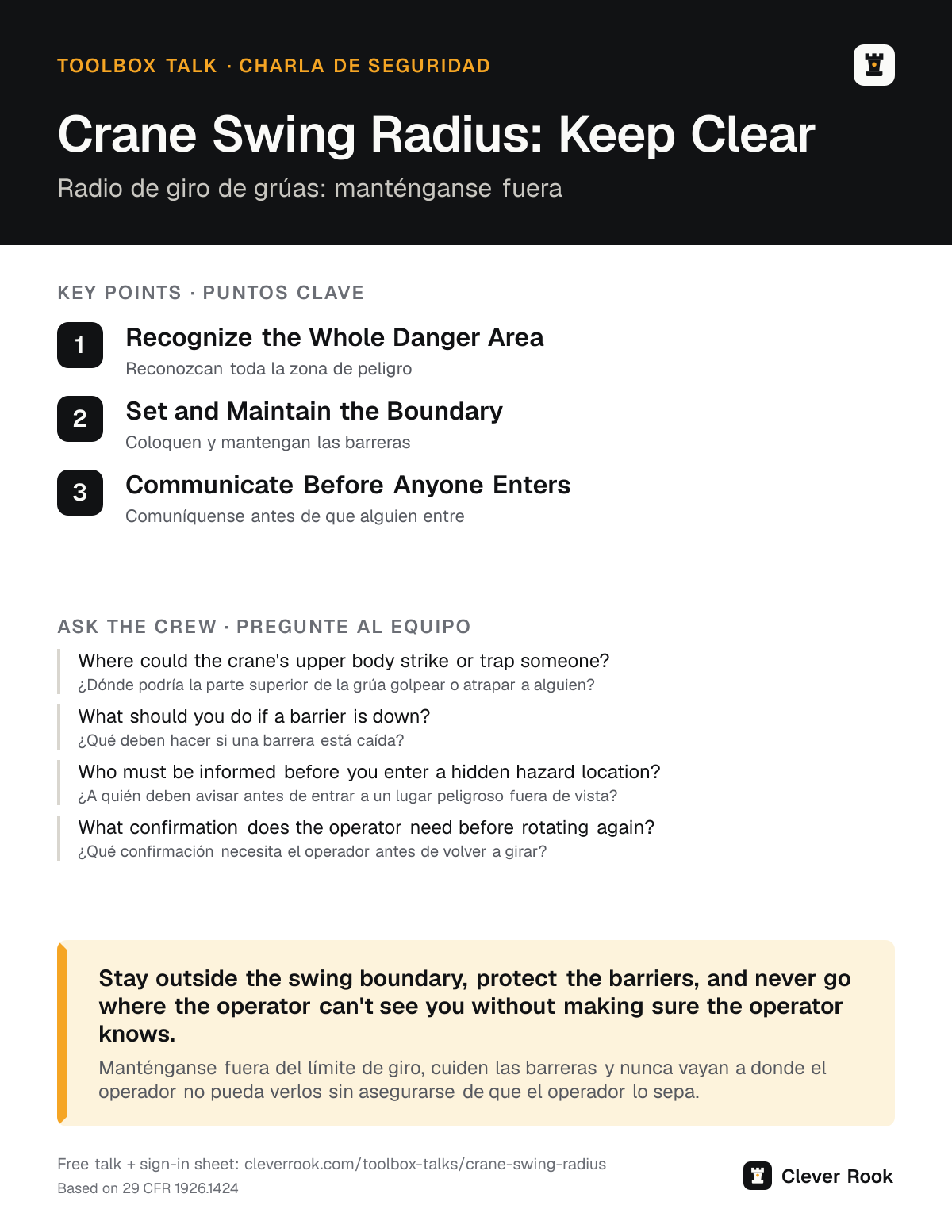
Crane Swing Radius: Keep Clear
Radio de giro de grúas: manténganse fuera
When a crane turns, its upper body and counterweight can strike someone or crush them against equipment, materials, or a wall. Crews working nearby may focus on the load and miss what is moving behind the operator. Barricades and clear communication help keep a routine task from becoming a crushing injury.
Cuando una grúa gira, su parte superior y su contrapeso pueden golpear a alguien o aplastarlo contra equipos, materiales o una pared. Las cuadrillas cercanas pueden concentrarse en la carga sin ver lo que se mueve detrás del operador. Las barreras y la comunicación clara ayudan a evitar lesiones por aplastamiento durante tareas rutinarias.
Recognize the Whole Danger Area
Reconozcan toda la zona de peligro
Look beyond the hook and load. The rotating upper body can sweep into a walking route or trap someone between the crane and a nearby object, even when the load is somewhere else.
Miren más allá del gancho y la carga. La parte superior que gira puede invadir un paso peatonal o atrapar a alguien entre la grúa y un objeto cercano, aunque la carga esté en otro lugar.
Before working near the crane, identify where its moving parts could strike or squeeze you. OSHA requires the employer to train assigned workers to recognize these areas; ask the foreman if you are unsure.
Antes de trabajar cerca de la grúa, identifiquen dónde sus partes móviles podrían golpearlos o aplastarlos. OSHA exige que el empleador capacite a los trabajadores asignados para reconocer estas zonas; pregunten al capataz si tienen dudas.
Plan walking routes, material staging, and cleanup outside the marked danger area. Do not treat an idle crane as permission to cut through, retrieve a tool, or stand behind the counterweight.
Planeen las rutas peatonales, el almacenamiento de materiales y la limpieza fuera de la zona de peligro marcada. Que una grúa esté detenida no significa que puedan cruzar, recoger una herramienta o pararse detrás del contrapeso.
Set and Maintain the Boundary
Coloquen y mantengan las barreras
In most cases, the employer must put up and maintain control lines, warning lines, railings, or similar barriers to mark the edge of the hazard area. Check that the boundary clearly shows where people must stay out, including the paths other trades use.
En la mayoría de los casos, el empleador debe colocar y mantener líneas de control, líneas de advertencia, barandales o barreras similares para marcar el borde de la zona de peligro. Revisen que el límite muestre claramente dónde no se debe entrar, incluidos los pasos que usan otros oficios.
Report missing, fallen, or moved barriers before continuing nearby work. Do not move a line to make a delivery easier; stop the affected task and have the boundary restored or the route changed.
Reporten las barreras faltantes, caídas o movidas antes de continuar trabajando cerca. No muevan una línea para facilitar una entrega; detengan la tarea afectada y hagan que se restablezca la barrera o se cambie la ruta.
Signs alone do not replace barriers. Only if the employer can show that barriers can't be put up on the ground or on the crane may it mark the area with warning signs, such as "Danger, Swing/Crush Zone," together with high-visibility markings on the crane. Then the employer must train each worker on what those markings mean.
Los letreros solos no reemplazan las barreras. Solo si el empleador puede demostrar que no se pueden colocar barreras en el suelo ni en la grúa, puede marcar la zona con letreros de advertencia, como "Peligro, zona de giro y aplastamiento", junto con marcas de alta visibilidad en la grúa. En ese caso, el empleador debe capacitar a cada trabajador sobre el significado de esas marcas.
Communicate Before Anyone Enters
Comuníquense antes de que alguien entre
Before entering a hazard location the operator cannot see, you or someone you direct must make sure the operator is informed. Do not assume that being nearby, waving, or wearing bright clothing means the operator knows your location.
Antes de entrar a un lugar peligroso que el operador no pueda ver, ustedes o alguien a quien se lo encarguen deben asegurarse de avisarle al operador. No supongan que estar cerca, saludar con la mano o llevar ropa llamativa significa que el operador conoce su ubicación.
Use a communication system agreed on beforehand. Once the operator knows someone has entered the hazard area, the operator must not rotate until that system confirms the person is in a safe position.
Usen un sistema de comunicación acordado de antemano. Una vez que el operador sepa que alguien entró a la zona de peligro, no debe girar hasta que ese sistema confirme que la persona está en una posición segura.
When part of one crane is within the working radius of another, a system to coordinate them is required. The contractor in charge of the site sets it up, or the employers running the cranes if no one is in charge. Ask the foreman how it works before nearby tasks begin; don't assume the operators have already worked it out.
Cuando una parte de una grúa está dentro del radio de trabajo de otra, se requiere un sistema para coordinarlas. Lo establece el contratista a cargo de la obra, o los empleadores que operan las grúas si nadie está a cargo. Pregunten al capataz cómo funciona antes de comenzar tareas cercanas; no supongan que los operadores ya lo resolvieron.
What would you do? · ¿Qué haría usted?
You are moving supplies and find a fallen warning line behind a crane. A tool you need is inside the boundary, where the operator cannot see you. A coworker says the crane is stopped, so grab it quickly. What would you stop, report, and arrange before anyone enters?
Están moviendo suministros y encuentran una línea de advertencia caída detrás de una grúa. Una herramienta que necesitan está dentro del límite, donde el operador no puede verlos. Un compañero dice que la grúa está detenida, así que pueden recogerla rápido. ¿Qué detendrían, reportarían y coordinarían antes de que alguien entre?
Questions for the crew · Preguntas para el equipo
- 1
Where could the crane's upper body strike or trap someone?
¿Dónde podría la parte superior de la grúa golpear o atrapar a alguien?
- 2
What should you do if a barrier is down?
¿Qué deben hacer si una barrera está caída?
- 3
Who must be informed before you enter a hidden hazard location?
¿A quién deben avisar antes de entrar a un lugar peligroso fuera de vista?
- 4
What confirmation does the operator need before rotating again?
¿Qué confirmación necesita el operador antes de volver a girar?
Stay outside the swing boundary, protect the barriers, and never go where the operator can't see you without making sure the operator knows.
Manténganse fuera del límite de giro, cuiden las barreras y nunca vayan a donde el operador no pueda verlos sin asegurarse de que el operador lo sepa.