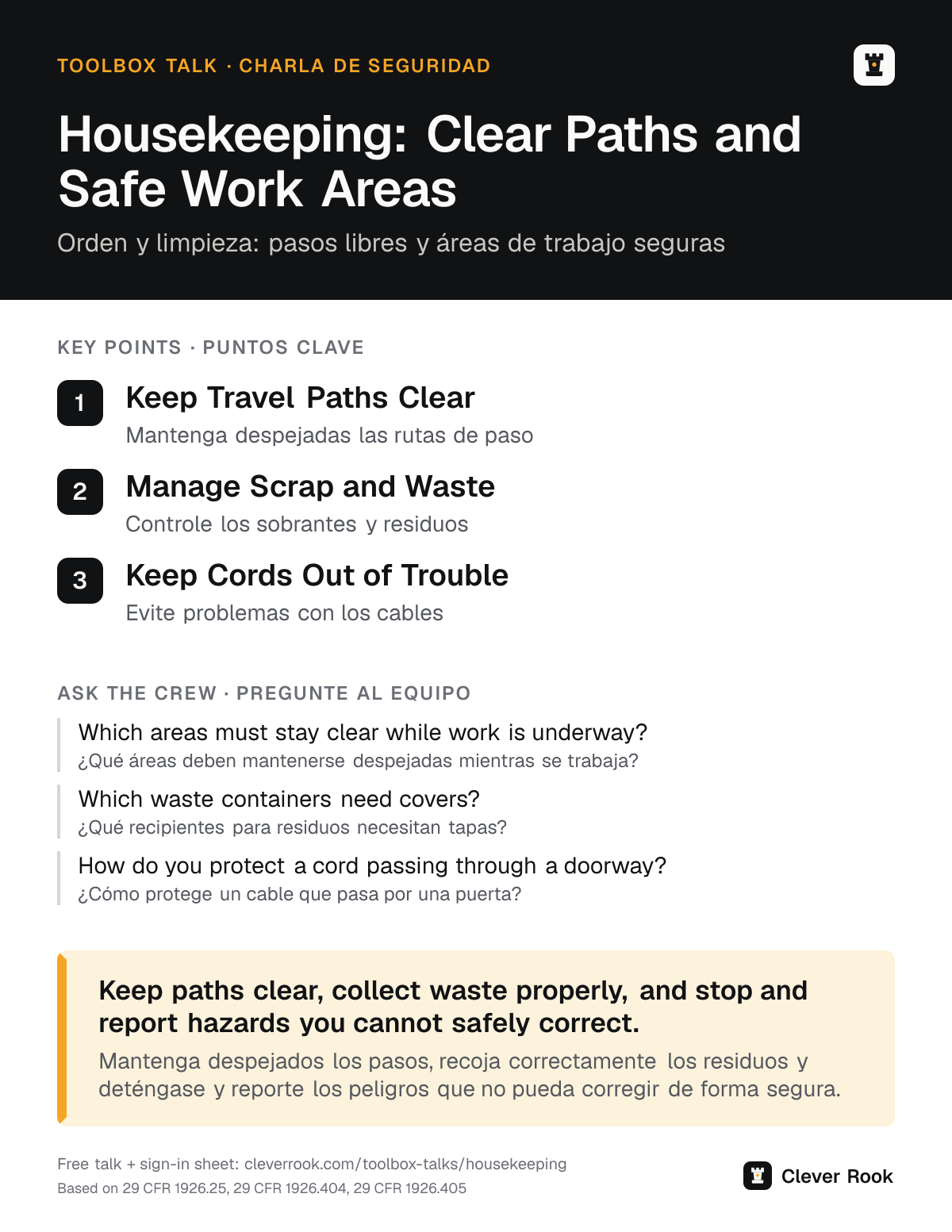
Housekeeping: Clear Paths and Safe Work Areas
Orden y limpieza: pasos libres y áreas de trabajo seguras
General construction crews share walkways, stairs, and work areas with other trades. Scrap, loose cords, and trash can turn those shared spaces into hazards, especially when someone is carrying materials. Keeping the site clear is part of doing the work, not just a cleanup task at the end.
Las cuadrillas de construcción general comparten pasillos, escaleras y áreas de trabajo con otros oficios. Los sobrantes, cables sueltos y basura pueden convertir esos espacios compartidos en peligros, especialmente cuando alguien lleva materiales. Mantener el sitio despejado es parte del trabajo, no solo una tarea de limpieza al terminar.
Keep Travel Paths Clear
Mantenga despejadas las rutas de paso
Keep debris out of work areas, passageways, and stairs during the work. This includes areas inside and around buildings, not just the space where your crew is working.
Mantenga los escombros fuera de las áreas de trabajo, pasillos y escaleras mientras se trabaja. Esto incluye las áreas dentro y alrededor de los edificios, no solo el espacio donde trabaja su cuadrilla.
Look along your route before carrying tools or materials. If scrap blocks the way, clear it safely before moving through. Do not step over a pile with your view blocked.
Revise su ruta antes de llevar herramientas o materiales. Si hay sobrantes bloqueando el paso, retírelos de forma segura antes de pasar. No pase por encima de una pila sin poder ver dónde pisa.
Remove scrap lumber and form lumber with protruding nails from work areas and travel paths. Watch for nails while handling it, and place the lumber where it will not create another hazard.
Retire de las áreas de trabajo y rutas de paso la madera sobrante y de cimbra que tenga clavos salidos. Tenga cuidado con los clavos al manipularla y coloque la madera donde no cree otro peligro.
Do not push debris from one crew's area into another crew's path. If you cannot safely clear an obstruction, stop using that route and tell the foreman what needs attention.
No empuje los escombros del área de una cuadrilla hacia el paso de otra. Si no puede quitar una obstrucción de forma segura, deje de usar esa ruta y avise al capataz qué necesita atención.
Manage Scrap and Waste
Controle los sobrantes y residuos
Remove combustible scrap and debris at regular intervals. Wood scraps and other material that can burn should not keep building up while work continues.
Retire a intervalos regulares los sobrantes y escombros que puedan arder. No deje que se sigan acumulando restos de madera y otros materiales combustibles mientras continúa el trabajo.
Use the provided containers to collect and separate waste, trash, oily and used rags, and other refuse. Know which container is intended for the waste you are handling.
Use los recipientes proporcionados para recoger y separar residuos, basura, trapos usados o aceitosos y otros desechos. Sepa cuál recipiente corresponde al residuo que está manejando.
Containers for garbage and oily, flammable, or hazardous waste must have covers. Use the appropriate covered container rather than leaving these wastes loose in a work area.
Los recipientes para basura y residuos aceitosos, inflamables o peligrosos deben tener tapas. Use el recipiente con tapa apropiado en vez de dejar estos residuos sueltos en un área de trabajo.
Waste must be disposed of frequently and regularly, with safe means available for removal. Report missing containers or an unsafe removal route instead of making a new pile beside the stairs.
Los residuos deben eliminarse con frecuencia y regularidad, y debe haber medios seguros para retirarlos. Reporte la falta de recipientes o una ruta de retiro insegura en vez de formar otra pila junto a las escaleras.
Keep Cords Out of Trouble
Evite problemas con los cables
Plan cord routes so walkways and stairs stay clear. Do not leave loose loops where people walk or drag cords through scrap lumber and sharp debris.
Planee las rutas de los cables para mantener despejados los pasillos y escaleras. No deje vueltas de cable donde camina la gente ni arrastre cables entre madera sobrante y escombros filosos.
Protect flexible cords from damage. Avoid sharp corners and projections. Where a cord passes through a doorway or another pinch point, provide protection against damage.
Proteja los cables flexibles contra daños. Evite esquinas filosas y salientes. Donde un cable pase por una puerta u otro punto donde pueda quedar aplastado, coloque protección contra daños.
Use three-wire extension cords designed for hard or extra-hard use with portable tools. Ask the foreman if you cannot tell whether a cord is suitable.
Use extensiones de tres conductores diseñadas para uso pesado o extrapesado con herramientas portátiles. Pregunte al capataz si no puede determinar si una extensión es adecuada.
Do not use damaged or defective electrical equipment; report it for repair. Do not hang temporary lights by their cords unless the lights and cords are designed for that purpose.
No use equipo eléctrico dañado o defectuoso; repórtelo para que lo reparen. No cuelgue luces temporales de sus cables, a menos que las luces y cables estén diseñados para eso.
What would you do? · ¿Qué haría usted?
You are about to carry materials upstairs. Nail-studded scrap sits on a landing, and an extension cord runs beneath it through a doorway. What would you clear, check, and report before using that route?
Está por subir materiales por la escalera. Hay madera sobrante con clavos salidos en un descanso, y una extensión pasa debajo de ella y atraviesa una puerta. ¿Qué retiraría, revisaría y reportaría antes de usar esa ruta?
Questions for the crew · Preguntas para el equipo
- 1
Which areas must stay clear while work is underway?
¿Qué áreas deben mantenerse despejadas mientras se trabaja?
- 2
Which waste containers need covers?
¿Qué recipientes para residuos necesitan tapas?
- 3
How do you protect a cord passing through a doorway?
¿Cómo protege un cable que pasa por una puerta?
Keep paths clear, collect waste properly, and stop and report hazards you cannot safely correct.
Mantenga despejados los pasos, recoja correctamente los residuos y deténgase y reporte los peligros que no pueda corregir de forma segura.