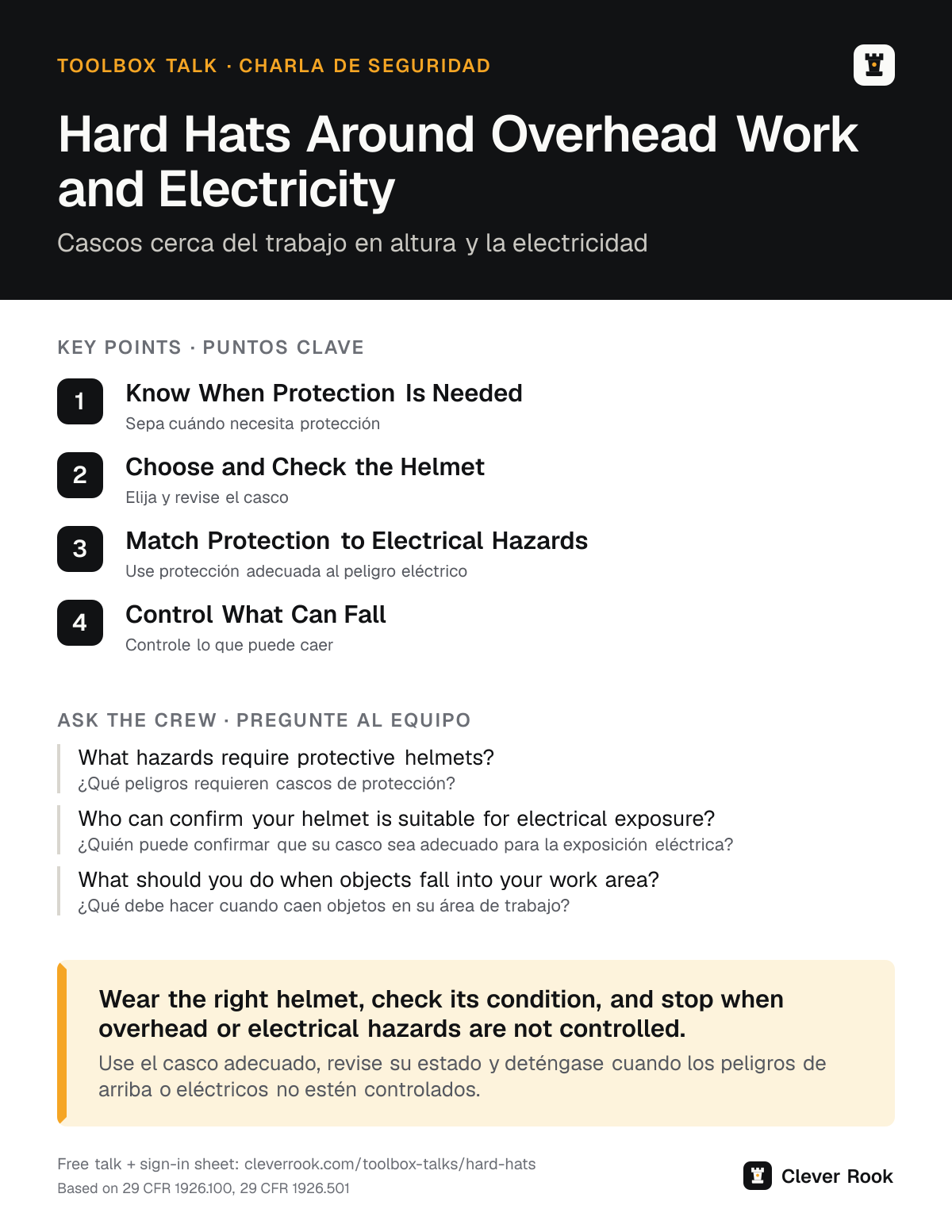
Hard Hats Around Overhead Work and Electricity
Cascos cerca del trabajo en altura y la electricidad
General construction crews often share space with people working overhead, moving materials, and working near electricity. A falling tool, a flying piece of material, or contact with an electrical hazard can injure your head. Head protection must match the hazard, and it does not make an unsafe work area safe.
Las cuadrillas de construcción suelen compartir espacios con personas que trabajan arriba, mueven materiales y trabajan cerca de la electricidad. Una herramienta que cae, un pedazo de material que sale volando o el contacto con un peligro eléctrico pueden lesionar la cabeza. La protección debe corresponder al peligro y no convierte un área peligrosa en segura.
Know When Protection Is Needed
Sepa cuándo necesita protección
Wear a protective helmet wherever head injury is possible from impact, falling or flying objects, or electrical shock and burns. This applies even when you are only passing through.
Use un casco de protección donde exista peligro de lesión en la cabeza por golpes, objetos que caen o salen volando, o descargas y quemaduras eléctricas. Esto también aplica si solo va de paso.
Look above and around you before entering a work area. Check for overhead crews, exposed framing, moving materials, and nearby electrical equipment.
Mire arriba y a su alrededor antes de entrar a un área de trabajo. Busque cuadrillas trabajando arriba, estructuras expuestas, materiales en movimiento y equipos eléctricos cercanos.
Do not judge the danger only by your own task. Someone installing, cutting, or handling material above you can create a head hazard below.
No evalúe el peligro solo por su propia tarea. Alguien que instala, corta o maneja materiales arriba puede crear un peligro para la cabeza de quienes están abajo.
Choose and Check the Helmet
Elija y revise el casco
The employer must provide head protection that meets the standards listed in OSHA's head protection rule, or demonstrate equivalent protection. Do not assume any hat or bump cap is enough.
El empleador debe proporcionar protección que cumpla las normas indicadas en la regla de OSHA sobre protección de la cabeza, o demostrar una protección equivalente. No suponga que cualquier gorra o casco ligero contra golpes es suficiente.
As a practical check, look over the shell and the inside support that holds it on your head. Report cracks, broken parts, or a fit that will not stay secure.
Como revisión práctica, examine la parte exterior y el soporte interior que sostiene el casco en la cabeza. Reporte grietas, piezas rotas o un ajuste que no se mantenga firme.
Follow the manufacturer's instructions for fitting, care, and replacement. If the helmet took a hit or its condition is doubtful, stop and ask for it to be checked before relying on it.
Siga las instrucciones del fabricante para el ajuste, cuidado y reemplazo. Si el casco recibió un golpe o tiene dudas sobre su estado, deténgase y pida que lo revisen antes de confiar en él.
Match Protection to Electrical Hazards
Use protección adecuada al peligro eléctrico
For exposure to high-voltage shock and burns, the employer must also provide head protection meeting the electrical insulation requirements in the listed standards. Insulation helps resist electrical current.
Ante exposición a descargas y quemaduras de alto voltaje, el empleador también debe proporcionar protección que cumpla los requisitos de aislamiento eléctrico de las normas indicadas. El aislamiento ayuda a resistir la corriente eléctrica.
Ask the supervisor to confirm that the helmet is suitable for the electrical exposure. Color and appearance alone do not tell you what protection it provides.
Pida al supervisor que confirme que el casco sea adecuado para la exposición eléctrica. El color y la apariencia por sí solos no indican qué protección ofrece.
A helmet is not permission to touch electrical equipment or move closer to exposed electrical parts. Stop and report an electrical hazard you cannot safely avoid.
Un casco no es permiso para tocar equipos eléctricos ni acercarse a partes eléctricas expuestas. Deténgase y reporte cualquier peligro eléctrico que no pueda evitar de forma segura.
Control What Can Fall
Controle lo que puede caer
Coordinate with the crew above before working below. As practical precautions, keep loose tools and materials away from edges and keep people out of the drop area.
Coordine con la cuadrilla de arriba antes de trabajar abajo. Como precauciones prácticas, mantenga herramientas y materiales sueltos lejos de los bordes y a las personas fuera del área donde puedan caer objetos.
Workers on walking or working surfaces must be protected by covers from objects falling through holes, including skylights. Report a missing or displaced cover.
Los trabajadores en superficies de tránsito o trabajo deben estar protegidos con cubiertas contra objetos que caigan por huecos, incluidos tragaluces. Reporte cualquier cubierta que falte o esté fuera de lugar.
If objects start falling, stop and move out of the affected area. Tell the supervisor so the overhead hazard can be addressed before work resumes.
Si empiezan a caer objetos, deténgase y salga del área afectada. Avise al supervisor para que se controle el peligro de arriba antes de reanudar el trabajo.
What would you do? · ¿Qué haría usted?
You are carrying materials beneath overhead work. A small piece drops nearby, and you notice your helmet's inside support is broken. What would you do before continuing?
Está llevando materiales debajo de un trabajo en altura. Un pedazo cae cerca y usted nota que el soporte interior de su casco está roto. ¿Qué haría antes de continuar?
Questions for the crew · Preguntas para el equipo
- 1
What hazards require protective helmets?
¿Qué peligros requieren cascos de protección?
- 2
Who can confirm your helmet is suitable for electrical exposure?
¿Quién puede confirmar que su casco sea adecuado para la exposición eléctrica?
- 3
What should you do when objects fall into your work area?
¿Qué debe hacer cuando caen objetos en su área de trabajo?
Wear the right helmet, check its condition, and stop when overhead or electrical hazards are not controlled.
Use el casco adecuado, revise su estado y deténgase cuando los peligros de arriba o eléctricos no estén controlados.