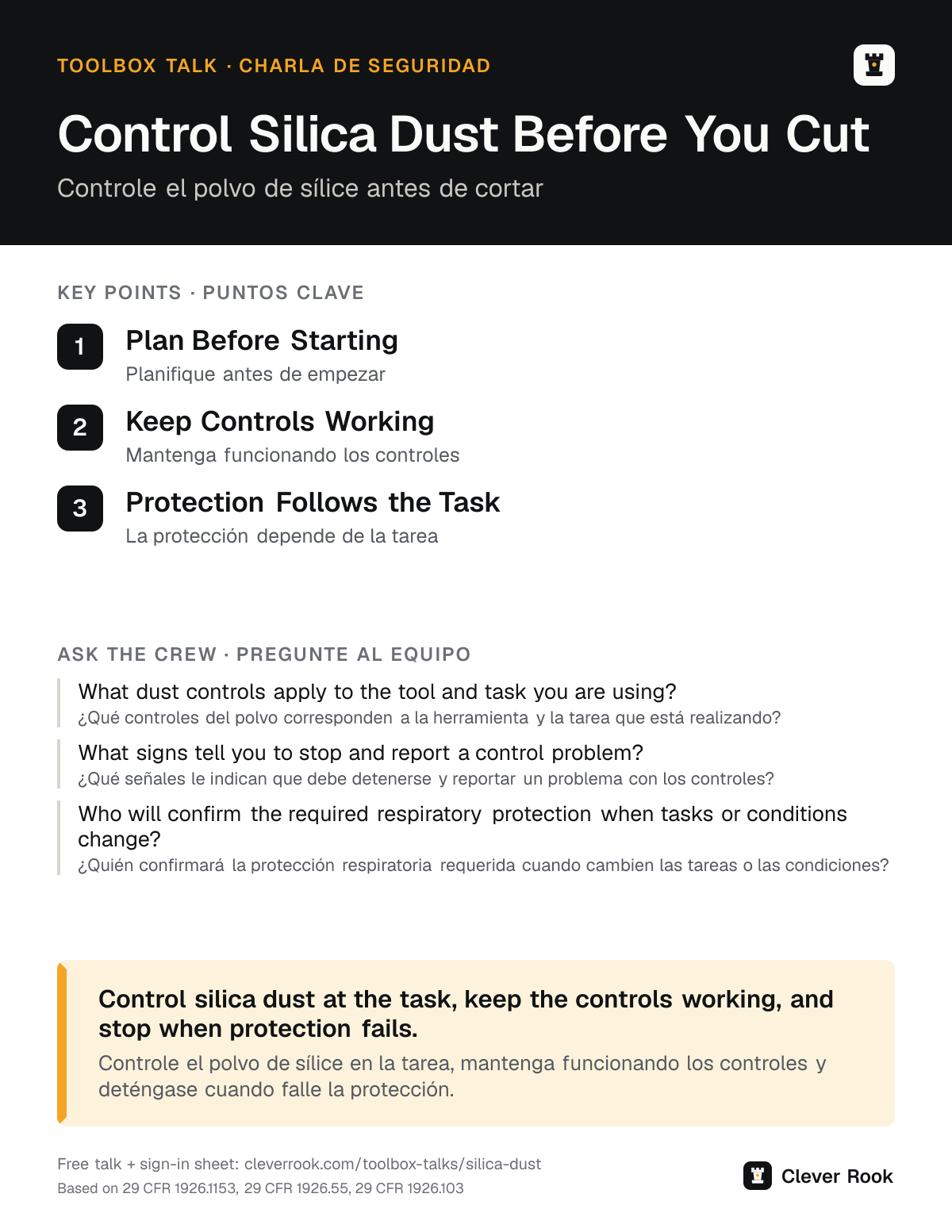
Control Silica Dust Before You Cut
Controle el polvo de sílice antes de cortar
Cutting, grinding, and drilling concrete or masonry can release fine silica dust that reaches deep into your lungs. Breathing this dust can cause serious diseases, including silicosis and lung cancer. General construction crews need to control dust at the tool and protect people working nearby.
Cortar, desbastar y perforar concreto o mampostería puede liberar polvo fino de sílice que llega profundamente a los pulmones. Respirar este polvo puede causar enfermedades graves, como silicosis y cáncer de pulmón. Las cuadrillas de construcción general necesitan controlar el polvo en la herramienta y proteger a quienes trabajan cerca.
Plan Before Starting
Planifique antes de empezar
Tell the foreman what material you will work on and which tool you will use. Include whether the work is outdoors, indoors, or in an enclosed space.
Dígale al capataz en qué material va a trabajar y qué herramienta usará. Indique si el trabajo será al aire libre, bajo techo o en un espacio cerrado.
Ask which dust-control method applies. OSHA's Table 1 lists controls for specific tasks. If the employer uses that approach, all listed controls and required respiratory protection must be fully implemented.
Pregunte qué método de control del polvo corresponde. La Tabla 1 de OSHA indica controles para tareas específicas. Si el empleador usa ese método, debe aplicar por completo todos los controles y la protección respiratoria requerida.
If the employer does not use the Table 1 approach, exposure must be assessed and limited. Do not assume a setup is safe just because another crew used it.
Si el empleador no usa el método de la Tabla 1, debe evaluar y limitar la exposición. No suponga que una instalación es segura solo porque otra cuadrilla la usó.
Check that exposure information matches the material, task, controls, and conditions. Information from an open outdoor area may not represent work in an enclosed room.
Revise que la información sobre exposición corresponda al material, la tarea, los controles y las condiciones. La información de un área abierta al aire libre puede no representar el trabajo en un cuarto cerrado.
Keep Controls Working
Mantenga funcionando los controles
Before starting, check the dust-control equipment assigned to the tool. Look for disconnected hoses, damaged parts, or a water supply that is not ready.
Antes de empezar, revise el equipo de control del polvo asignado a la herramienta. Busque mangueras desconectadas, piezas dañadas o un suministro de agua que no esté listo.
When using wet methods, apply enough water to minimize visible dust. A little water on the surface is not enough if dust keeps rising during the cut.
Cuando use métodos con agua, aplique suficiente agua para minimizar el polvo visible. Un poco de agua sobre la superficie no basta si el polvo sigue levantándose durante el corte.
For Table 1 work indoors or in enclosed areas, provide exhaust as needed to minimize visible airborne dust buildup. Coordinate with the foreman before dust spreads into nearby work areas.
Para trabajos de la Tabla 1 bajo techo o en áreas cerradas, proporcione extracción de aire según sea necesario para minimizar la acumulación de polvo visible. Coordine con el capataz antes de que el polvo llegue a áreas cercanas.
If water stops, dust collection fails, or dust builds up, stop the task and report it. Restore the control before continuing; do not finish the cut with the control disabled.
Si se interrumpe el agua, falla la recolección de polvo o el polvo se acumula, detenga la tarea y repórtelo. Restablezca el control antes de continuar; no termine el corte con el control desactivado.
Protection Follows the Task
La protección depende de la tarea
Dust controls come first. When feasible controls cannot reduce exposure enough, the employer must still use them and add respiratory protection that meets the applicable requirements.
Los controles del polvo van primero. Cuando los controles viables no pueden reducir suficientemente la exposición, el empleador debe seguir usándolos y agregar protección respiratoria que cumpla los requisitos correspondientes.
Ask whether your task requires a respirator. Do not substitute a face covering or choose respiratory protection on your own.
Pregunte si su tarea requiere un respirador. No lo sustituya con una cubierta facial ni elija la protección respiratoria por su cuenta.
Tell the foreman when you switch between cutting, grinding, and drilling. Under Table 1, combined task time can change which respiratory protection is required.
Avise al capataz cuando cambie entre cortar, desbastar y perforar. Según la Tabla 1, el tiempo combinado de las tareas puede cambiar la protección respiratoria requerida.
What would you do? · ¿Qué haría usted?
You are cutting concrete inside a room. The water supply slows, and visible dust starts drifting toward a worker drilling nearby. Someone suggests finishing the cut first. What would you stop, report, and check before restarting?
Está cortando concreto dentro de un cuarto. El suministro de agua disminuye y el polvo visible empieza a llegar a una persona que perfora cerca. Alguien sugiere terminar primero el corte. ¿Qué detendría, reportaría y revisaría antes de volver a empezar?
Questions for the crew · Preguntas para el equipo
- 1
What dust controls apply to the tool and task you are using?
¿Qué controles del polvo corresponden a la herramienta y la tarea que está realizando?
- 2
What signs tell you to stop and report a control problem?
¿Qué señales le indican que debe detenerse y reportar un problema con los controles?
- 3
Who will confirm the required respiratory protection when tasks or conditions change?
¿Quién confirmará la protección respiratoria requerida cuando cambien las tareas o las condiciones?
Control silica dust at the task, keep the controls working, and stop when protection fails.
Controle el polvo de sílice en la tarea, mantenga funcionando los controles y deténgase cuando falle la protección.