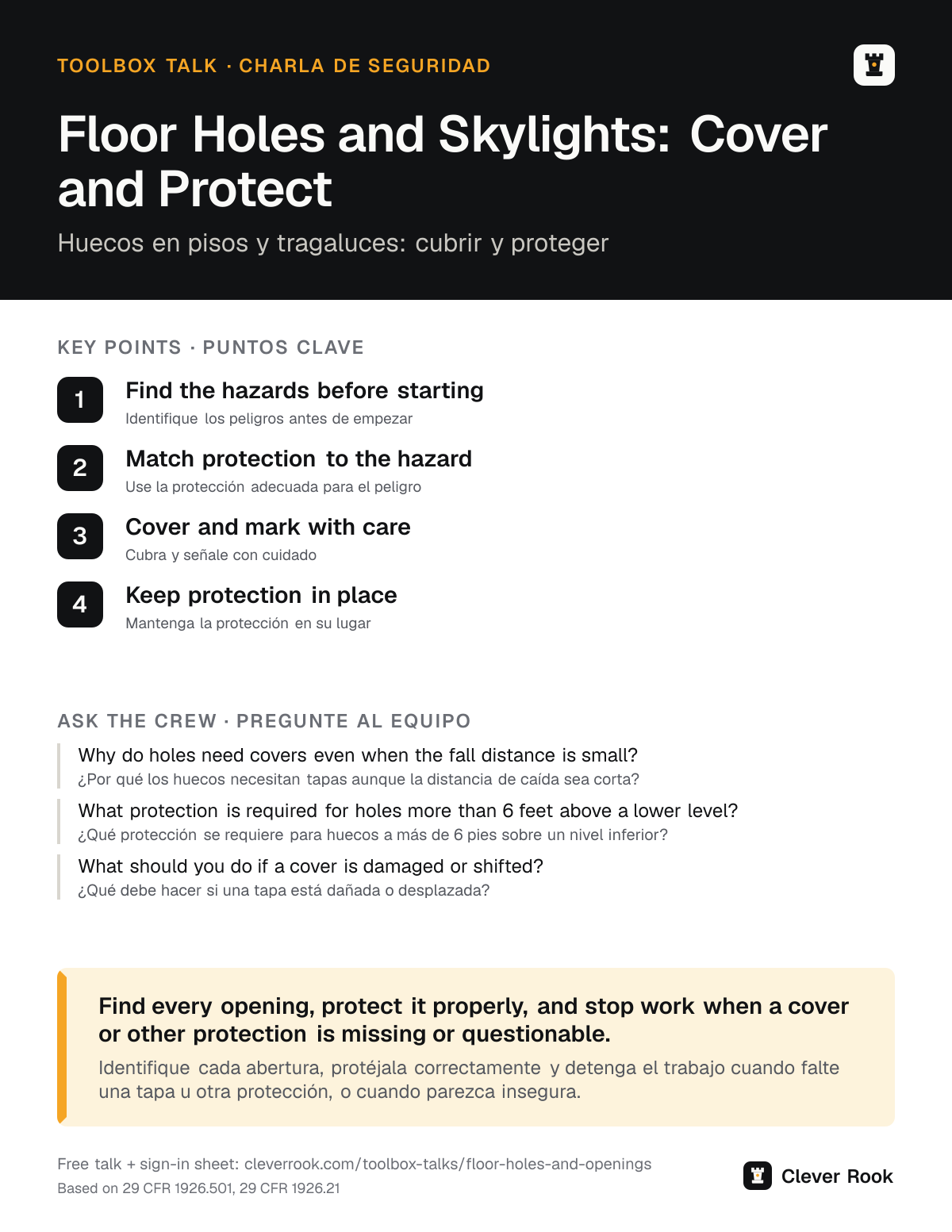
Floor Holes and Skylights: Cover and Protect
Huecos en pisos y tragaluces: cubrir y proteger
Floor and roof holes can cause falls, trips, and injuries from falling tools or materials. General construction crews covering and marking openings need to protect both the people working nearby and anyone below. Skylights need the same attention as other holes.
Los huecos en pisos y techos pueden causar caídas, tropiezos y lesiones por herramientas o materiales que caen. Las cuadrillas de construcción que cubren y señalan aberturas necesitan proteger tanto a quienes trabajan cerca como a quienes están abajo. Los tragaluces necesitan la misma atención que otros huecos.
Find the hazards before starting
Identifique los peligros antes de empezar
Look over the work area and the route used to carry covers, tools, and materials. Watch for floor openings, roof holes, and skylights along the way.
Revise el área de trabajo y la ruta para llevar tapas, herramientas y materiales. Busque aberturas en pisos, huecos en techos y tragaluces en el camino.
Do not assume a skylight is safe to step on because it looks solid. Treat it as a hole that needs protection, not as part of the walking surface.
No suponga que puede pisar un tragaluz porque parece sólido. Trátelo como un hueco que necesita protección, no como parte de la superficie para caminar.
Ask the foreman to explain the hazards and protection before work begins. If you cannot tell whether an opening is protected, stay clear and ask.
Pida al capataz que explique los peligros y la protección antes de comenzar. Si no puede saber si una abertura está protegida, manténgase alejado y pregunte.
Match protection to the hazard
Use la protección adecuada para el peligro
For holes more than 6 feet above a lower level, workers must be protected from falling through by covers, guardrails around the holes, or personal fall arrest systems. A fall arrest system catches a worker during a fall.
En huecos a más de 6 pies sobre un nivel inferior, los trabajadores deben estar protegidos contra caídas mediante tapas, barandales alrededor del hueco o sistemas personales de detención de caídas. Estos sistemas detienen al trabajador durante una caída.
Covers are required to protect workers from tripping in or stepping into or through holes. Do not treat a shallow opening as harmless just because the fall distance is small.
Se requieren tapas para proteger a los trabajadores de tropezar o pisar dentro de los huecos o caer a través de ellos. No considere inofensiva una abertura poco profunda solo porque la distancia de caída es corta.
Covers are also required to protect workers from objects falling through holes. Think about the people below before moving tools, debris, or materials near an opening.
También se requieren tapas para proteger a los trabajadores de objetos que caen por los huecos. Piense en las personas que están abajo antes de mover herramientas, escombros o materiales cerca de una abertura.
Cover and mark with care
Cubra y señale con cuidado
Before placing a cover, confirm how you will be protected while the hole is exposed. Do not lean over an unprotected opening to reach the other side.
Antes de colocar una tapa, confirme cómo estará protegido mientras el hueco esté descubierto. No se incline sobre una abertura sin protección para alcanzar el otro lado.
Check for covers that are damaged, shifted, or leave part of the opening exposed. Stop and report these conditions rather than stepping onto a questionable cover.
Revise si las tapas están dañadas, desplazadas o dejan parte de la abertura descubierta. Deténgase y reporte estas condiciones en lugar de pisar una tapa que parezca insegura.
Make markings easy for approaching workers to notice. Markings warn people about a hazard; they do not replace a cover or the required fall protection.
Haga que las señales sean fáciles de ver para quienes se acercan. Las señales advierten del peligro; no reemplazan una tapa ni la protección requerida contra caídas.
Keep protection in place
Mantenga la protección en su lugar
Do not remove a cover just to make material handling easier. Before planned removal, ask the foreman how workers nearby and below will remain protected.
No quite una tapa solo para facilitar el movimiento de materiales. Antes de retirarla de manera planificada, pregunte al capataz cómo seguirán protegidos los trabajadores cercanos y los de abajo.
If work exposes a new hole, stop traffic toward it and notify the foreman. Keep people away while proper protection is arranged.
Si el trabajo deja un nuevo hueco descubierto, detenga el paso hacia él y avise al capataz. Mantenga alejadas a las personas mientras se prepara la protección adecuada.
When handing off work, tell the next crew where openings are and which conditions need attention. Never assume another trade knows what is under a cover.
Al entregar el trabajo, informe a la siguiente cuadrilla dónde están las aberturas y qué condiciones necesitan atención. Nunca suponga que otro oficio sabe qué hay debajo de una tapa.
What would you do? · ¿Qué haría usted?
While carrying a roof-hole cover, you see another cover shifted beside a skylight. A coworker is approaching with materials that block their view. What would you do before continuing?
Mientras lleva una tapa para un hueco del techo, ve otra tapa desplazada junto a un tragaluz. Un compañero se acerca cargando materiales que le bloquean la vista. ¿Qué haría antes de continuar?
Questions for the crew · Preguntas para el equipo
- 1
Why do holes need covers even when the fall distance is small?
¿Por qué los huecos necesitan tapas aunque la distancia de caída sea corta?
- 2
What protection is required for holes more than 6 feet above a lower level?
¿Qué protección se requiere para huecos a más de 6 pies sobre un nivel inferior?
- 3
What should you do if a cover is damaged or shifted?
¿Qué debe hacer si una tapa está dañada o desplazada?
Find every opening, protect it properly, and stop work when a cover or other protection is missing or questionable.
Identifique cada abertura, protéjala correctamente y detenga el trabajo cuando falte una tapa u otra protección, o cuando parezca insegura.